Oct 2026
Retail Centers Focus on Experiences That Cannot Be Delivered Online
Dining, entertainment, fitness, wellness, and local businesses are playing a larger role in shopping-center tenant strategies.
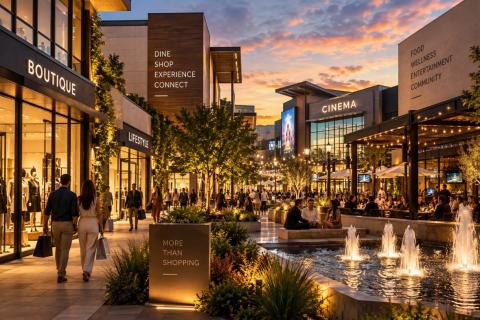
Physical retail continues to evolve as property owners seek uses that encourage repeat visits and provide experiences beyond traditional shopping. Dining, fitness, entertainment, personal services, wellness concepts, and community events are increasingly being used to complement conventional merchandise-based tenants.
Recent visitation information points to meaningful differences among retail formats. Open-air shopping centers recorded stronger traffic patterns than several enclosed and outlet formats during the first half of 2026.* Industry analysts also indicate that landlords are evaluating tenant combinations based on their ability to increase visit frequency and the amount of time customers spend at a property.*
This shift is contributing to a broader reconsideration of what constitutes an anchor tenant. A restaurant cluster, fitness operator, entertainment venue, specialty grocer, or locally recognized business may generate consistent traffic even when the use does not resemble a traditional department store anchor. Placer.ai has highlighted tenant mix, local operators, visit frequency, and customer engagement as important considerations for shopping-center strategies in 2026.*
Not every experience-oriented concept will be appropriate for every center. Buildout costs, tenant credit, parking needs, operating hours, noise, exclusivity provisions, and compatibility with surrounding uses require careful evaluation. Property owners may also need to consider whether an operator’s business model can support the occupancy costs and capital improvements associated with the location.
*Source / Read More:
Placer.ai, Mall Foot Traffic Trends and the New Tenant Mix Playbook
*Additional Context:
Capitol One: Shopping Mall Foot Traffic Statistics, 2026 Report